

Why your job title is silently killing your career
Last year I sat down with a client — let's call her Sarah — who had been applying for senior product management roles for four months. Smart, experienced, genuinely excellent at her job. Zero recruiter inbound. Almost zero callbacks.
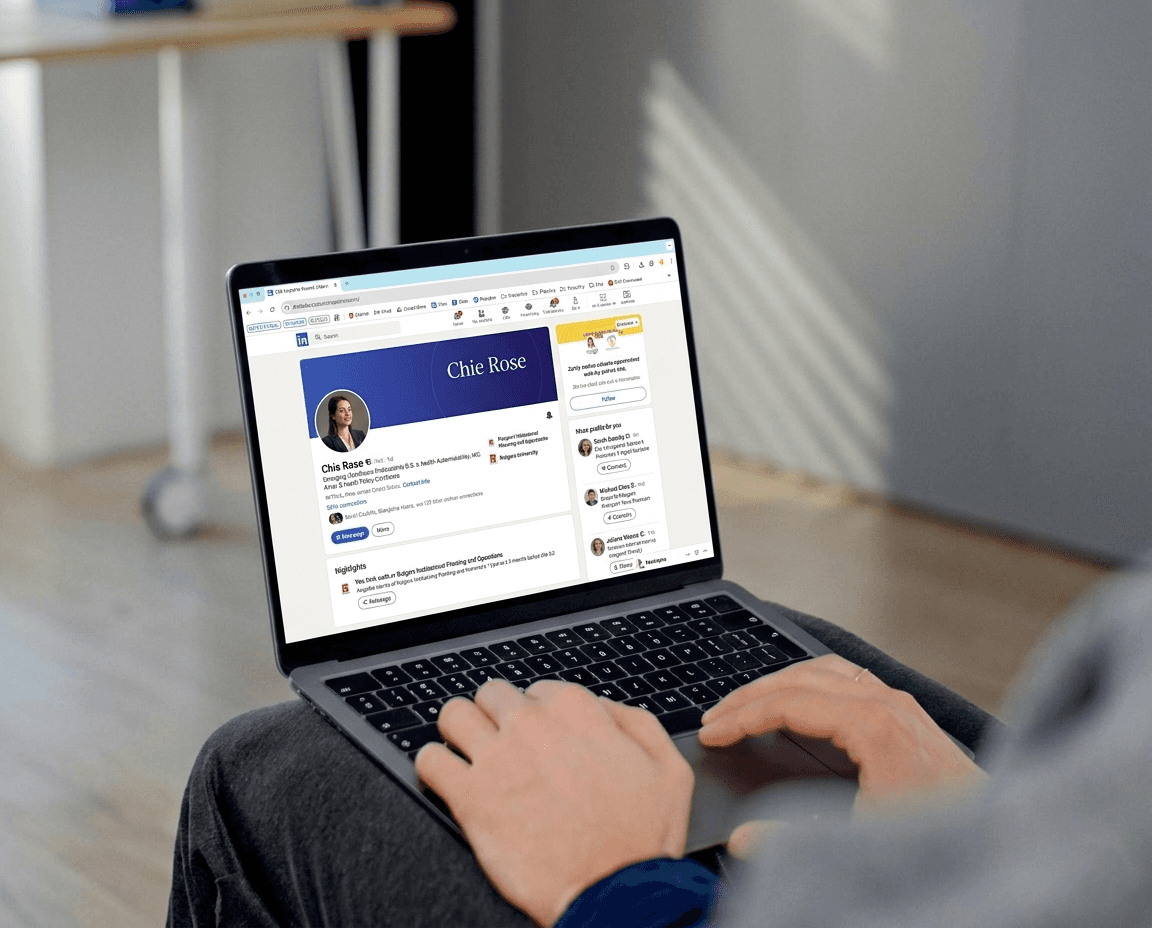
I looked at her LinkedIn headline. It said: "Senior Product Manager | SaaS | B2B"
That is not a headline. That is a label. And the difference between a label and a headline is the difference between being invisible and being found.
Here is what most people do not understand: LinkedIn is a search engine. Recruiters type in keywords, LinkedIn returns results, and you are either on page one or you do not exist. Your headline is the single most heavily weighted field in that search algorithm. What you put there — or do not put there — directly determines whether you get found.
The Uncomfortable Truth
Recruiters do not search for job titles. They search for skills, problems solved, and outcomes delivered. If your headline only contains your title, you are playing a different game than the people getting inbound messages.
The formula that changes everything
After testing dozens of headline formats across 300+ clients, I have landed on a formula that consistently outperforms everything else. It is not magic. It is just the right information, in the right order, for the right audience.
Let me break down why each part of this formula works and why the order matters.
1. What you do in plain English
Not your job title. What you actually do that creates value. "Helping tech companies build product teams" tells a recruiter instantly whether you are relevant to what they are hiring for.
2. Who you do it for your target
This is where most headlines stop too early. Adding "for [specific audience]" instantly makes your profile feel relevant to the right people and filters out the wrong ones.
3. The result they get the outcome
This is the difference between a description and a value proposition. "Ship faster" is a result. It answers the recruiter's unspoken question: why should I click on this profile?
4. Credibility signals your proof
Ex-Google, 10 years in fintech, Forbes 30 Under 30, one or two signals that validate the claim. Keep them brief. They are seasoning, not the main dish.
The one mistake even smart professionals make
I have reviewed thousands of LinkedIn profiles at this point. And there is one mistake I see over and over, even from highly accomplished people who should know better.
They write their headline for themselves instead of for the recruiter.
A headline like "Passionate leader | Strategic thinker | Change agent | Innovator" tells the recruiter nothing useful. What do you do? Who do you help? What results do you get? The words sound impressive but they carry zero information.
💡 The Test That Tells You If Your Headline Works
Read your headline and ask: "If I were a recruiter, would I know in 3 seconds exactly who this person is, what they do, and whether they are relevant to my search?" If the answer is no, rewrite it. A good headline passes the 3-second test every time.
The second mistake is keyword stuffing: Packing the headline with every possible skill and tool, hoping to rank for more searches. This backfires in two ways: it looks unprofessional to the humans reading it, and LinkedIn's algorithm is smarter than it used to be. It now rewards relevance over density.

How to write your headline in 20 minutes
You do not need days to fix this. Here is the exact process I walk every client through and you can do it right now.
⚡ Action step: Do this now
Write your new LinkedIn headline in 20 minutes
Write down what you actually do in one sentence, not your title. What do you do? Start with a verb: "helping," "building," "leading," "growing."
Identify who you do it for: An industry, company type, or audience. Be specific. "Tech companies" beats "companies." "Series A startups" beats "startups."
Name the result they get, not what you do, but what changes because of it. Revenue, speed, clarity, growth, savings.
Add one or two credibility signals ex-company, years of experience, a notable result, or an award. Keep it under 30 characters.
If you are open to new roles, add "Open to [specific role title] roles" at the end. This is a search term recruiters actually use.
Check the character count. You have 220. Use as many as you can without padding. Use · (middle dot) to separate sections cleanly.
What happens after you change it
When clients implement this formula, the results are consistent. Most see an uptick in profile views within 48 hours. Recruiter messages typically start within 5–14 days, depending on the industry and how competitive the space is.
But here is the thing nobody tells you: changing your headline is not just about getting found. It is about getting found by the right people. A vague headline attracts vague opportunities. A specific headline attracts specific, well-matched opportunities. Which means better conversations, better fit, and ultimately better offers.
Sarah from the beginning of this article? She updated her headline, got three recruiter messages in a week, and landed a Senior PM role at Google two months later, with a $65,000 salary increase from where she started. The headline was not the only thing we worked on. But it was the thing that opened the door.
Get articles like this every Tuesday
Join 8,000+ professionals who read The Career Journal weekly. No fluff, just actionable career advice.


